204: How to Earn $2,500 per Month as a Part-Time Speaker
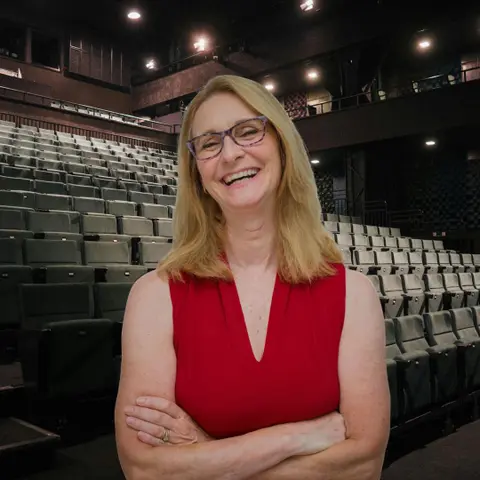
Could one talk a month add $2,500 to your side hustle income? Speaker agent Li Hayes reveals how to go from your first free talk to paid keynotes as a part-time speaker, plus the mistake new speakers make most.

 Apple Podcasts

 Spotify

 RSS Feed

 Amazon Music
Key Takeaways
- Guest Li Hayes shares that earning $2,500 per month as a part-time speaker by the end of your first year is a realistic goal if you are willing to put in the necessary work.
- Li, founder of the speaker management agency Go Leeward, shares how to transition from giving your first free talk to commanding $2,500 per gig.
- Before writing a single word of your presentation, you must figure out what the audience needs to ensure maximum impact.
- Speaking for free can be a strategic, smart move early on to build your portfolio, gain confidence, and secure testimonials.
- With the right strategies and mindset, even if you are an introvert, you can successfully build a lucrative side hustle as a part-time speaker.
- Practicing in front of honest audiences, such as through Toastmasters, is one of the best ways to prepare for paid speaking gigs.
What if a single talk a month could add $2,500 to your income?
It could be a boost to the side hustle you already have, or a brand-new side hustle of its own.
My guest today says that's realistic by the end of your first year if you're willing to put in the work.
One of the speakers she manages now earns $100,000 for a single hour on stage. When she started working with him, he was getting a mere $500 for a gig.
Li Hayes is the founder of the speaker management agency Go Leeward and host of the Path to the Main Stage podcast.
Today, Li walks us through;
- the path from that first free talk to $2,500 per gig
- the thing to figure out before you write a single word of your talk
- when speaking for free is a really smart move
- how to price virtual gigs (yes, there is a difference!)
- how to handle travel costs, and
- the biggest mistake new speakers make on stage.
And if you're an introvert like me who thinks this isn't for you, Li might just change your mind!
Plus, I share how one piece of honest feedback during a sales pitch led me to Toastmasters, and why practising in front of people who will tell you the truth, is one of the best ways to prepare for paid speaking gigs.
Do you like what you're hearing? Consider giving it a caffeinated thumbs up. We'd really appreciate it!
Need a little (and sometimes big) push to start and stay focused to grow your side hustle? Dive into my online Masterclass: How To Turn Your Thoughts Into Wanted Things.
Connect with Li:
Path to the Main Stage Podcast
Connect with Joan:
Be on the show!
Do you have a side hustle success story to tell?
Frequently Asked Questions
Who is Li Hayes?
Li Hayes is the founder of the speaker management agency Go Leeward and the host of the Path to the Main Stage podcast, specializing in helping speakers grow their speaking businesses.
How can I make money as a part-time speaker?
You can build a part-time speaking side hustle by starting with free talks to gain experience, refining your message, and gradually increasing your rates up to $2,500 per gig or more.
Is speaking for free a good idea for new speakers?
Yes, speaking for free can be a smart move when starting out because it allows you to build your stage presence, test your material, and collect valuable social proof and testimonials.
Can introverts be successful public speakers?
Absolutely. Many introverts succeed in public speaking by leveraging their listening skills, knowing their topic well, and preparing thoroughly, enabling them to deliver their talk with confidence.
[00:00:00] Speaking is a hustle. It is the lowest barrier to entry, highest paid business that there is. It's a great way to grow your business. It's a great way to make a little money on the side, but you have to go all in and do it. That first hurdle is hard. It's gonna be tough, but it's worth it. You can do it.
What if one talk a month could add $2,500 to your income, either as an addition to your [00:00:30] existing side hustle or as the side hustle itself? My guest today says that's realistic by the end of your first year if you're willing to put in the work. One of the speakers she manages now earns $100,000 for a single hour on stage.
But when she started working with him, he was getting a mere $500 for a gig. Li Hayes is the founder of the speaker management agency Go Leeward, and host of the Path to the Mainstage podcast. She books speakers for major associations and events, and she helps [00:01:00] entrepreneurs add speaking to their skillset.
Her own story's pretty wild. As a director of HR, she had to let go of all 272 employees in her division, and the last name on that list was her own. Weeks later, a speaker friend asked her for help, and she never looked back. Today, Lee walks us through the path from your first free talk to $2,500 per gig.
You'll hear the one thing to figure out before you write a single word of your talk, when speaking for free is really [00:01:30] smart, how to price virtual gigs, yes, there's a difference, how to handle travel costs, and the biggest mistake new speakers make on stage. And if you're an introvert like me and you think this isn't for you, I think she'll change your mind.
I'm Joan Posivy, and welcome to Side Hustle Hero.
Welcome, Li Hey. Good to see you. Thank you so much for having me here. You have a fun, exciting show that makes a difference for people. Thank you so much. We really enjoy doing it. Leah, imagine [00:02:00] someone is very knowledgeable about a topic, maybe it's related to their full-time work, or it's been a passion of theirs for many years.
If they're thinking of becoming a speaker as a side hustle on that topic, what could they realistically expect to earn? So that's a complex answer to a simple question. It depends, right? So speaking, you can start reasonably, and this is all in USD- Okay ... $500 for a gig for a local rotary club or something is not unreasonable, [00:02:30] and then working your way up to maybe $2,500 for a single gig is not unreasonable in your first year if you practice the craft, if you really go after it.
No one's gonna hand you the money. Yeah. But if you really go after it and learn all the things we're gonna talk about, 2,500 is not an unreasonable fee to ask for a single hour of your time on a stage speaking to an audience.
Wow. Well, how many speakers do you currently represent, and do they do this [00:03:00] full-time, part-time?
Speaking is the perpetual side hustle. It really is. Okay. I, over, I, over my shoulder for anybody who's watching on video, I have my speakers. I work with, I think, 19, going on 20 speakers right now, and I try to keep a limit 'cause I know my speakers really well. Most of them started this as a side hustle or created the, you know, out of their big business, created speaking as a secondary income- Hmm
or a secondary way to get clients. And so out of my 20 speakers, though, [00:03:30] you were saying before, don't give the unreasonable expectation of making $100,000. I have a speaker who makes $100,000 for one hour, so I have that full range of speakers. Now, granted, because my speakers are established enough- Right
even if it's a side hustle, that they need a manager, most of them are 10,000 and up per hour. Okay. But my guy who's making 100,000 right now, when I started with him 10 years ago, $500. Those were the gigs we were getting. So- No way. [00:04:00] Way. Honestly. Okay. Because when you start, nobody knows who you are. You've got no proof- Yeah
of concept. It's like starting any other business. You gotta prove yourself. Okay. Well, let's talk about the path to that first, say, $2,500- Yeah ... a month. Where would somebody even start to figure out if this is a viable side business for themselves? For speaking, I think you really need to look inside yourself first and say, "Am I a subject matter expert at [00:04:30] something?"
Whatever that might be. Do I have a message worth sharing? Maybe something amazing happened to you. Maybe you have a great product. Maybe you have a great idea. But is there something that you feel you could talk about? So first look in there and say, "Is there anything?" Once there is something, then you start looking for who cares about that.
Mm. Mm-hmm. Yeah. In, and in business, uh, my, my purview is really business, and Rotary [00:05:00] Club, uh, community, any sort of community group. Sometimes there are private membership groups who are in a business similar to yours, and they would like to hear from you. If you have some little piece that you figured out, maybe you have some little job and you went, "You know what?
I do this little component better than anybody else, and that's why I'm good at what I do." Yeah. If you will speak about that, people will pay you to speak about it, 'cause they wanna learn what you've learned. Even if it seems small- Right ... it could be big. [00:05:30] And that's how we sometimes overlook things, because it comes second nature to us.
Yeah. Not realizing that no, a lot of people will, will pay you for this information. Yeah. And it could be something just a little bit better, a little bit faster, a little bit different. Dig into that and talk about it. So what would be the first step then? Writing something out or doing the pitch to somebody?
If I'm th- s- thinking, "Okay, I, I, I seriously wanna do this," what would be my first step? [00:06:00] So when I teach people how to speak, the first thing I say is, "Is there a market for what you kn- for your information?" Yeah. That's the first thing to look at, and that's just research, right? Goodness knows in this world of AI you can say, "I want to become a speaker.
I'm an expert at limousine services," right? "I have my own car. I offer services as a private entrepreneur. Is there a market for this?" And it's gonna spit out why, yes, there are 10 events a [00:06:30] year that specialize in private limousine services who hire speakers. And you can go, "Oh, that's my market," right? So really the first thing you wanna do is just search for people who would care about what you do- Right
and what you know. That's where you start. Once you have a market, yeah, this... there's something here, then you can start to write your message. But don't do it the other way around, because some speakers get really excited about speaking and they start writing, right? "Oh, I'm gonna do this. I'm gonna write my [00:07:00] keynote."
That's like tailoring a dress before you know who it's gonna go on, right? Okay. You need to understand- Yeah ... the model, and then you'll say, "I wanna... I want to make this dress, but who's it going to fit?" Figure out who it's gonna fit and then tailor it. So- Yeah ... market, then write it. And in your example of the limo service- Yeah
con- conferences, I think I'd wanna take a look really specifically at the speakers that they are booking, and what are [00:07:30] the topics, what are the write-ups. Because the other thing I think we need to keep in mind is that you mentioned first off about a, like, a potential product that somebody's selling. Well, nobody really cares about your product.
It's how is it gonna improve their life, what are you gonna teach them that they can walk away with? Well, what's really interesting about speaking is that you're... The people you're selling your service to are one level higher on the food chain, meaning, yes, you're right, nobody cares about [00:08:00] your product.
However, your audience might be other people who sell products versus consumers. Oh, okay. Yeah. So they do care- Like a B, B ... about your product, right? Yeah. So you're looking, it's... You're looking at B2B because you as a sp- as a supplier of goods, you're selling to an end user. As a speaker of goods, you're speaking to other people who wanna sell.
Okay. But it's a great way to network. So because y- I'm sure your next question's gonna be, "But, like, why would you do this if those people are not [00:08:30] buying your product?" And it's because you're networking with other people now who sell maybe something similar. Mm-hmm. Or you can now cross-pollinate and get their customers.
It really helps to have more people who are in your business to help you expand your own business. Yes, and we saw that recently on an episode about becoming, like somebody who marries people. Yeah. And instead of just doing that, now he's talking to caterers, and other [00:09:00] event planners, and- Yes ... restaurant equipment supply.
Like, all sorts of things. Yeah, and, and- Party and table rentals ... and what a great industry to be in for speaking. There are so many events that involve wedding planner events, and what a great place to speak and say, "I'm someone who marries people, and what I can tell you about that union is here are things that work great, here are things that have failed."
Mm. Wedding planners would eat that up. And those are the people that could potentially be [00:09:30] hiring you. Hire, yes. Because they could have a couple that they know that are starting to plan the wedding, but, "Oh, who's gonna marry you?" "Oh, we don't know yet." Ta-da. Yeah. Right. Because we're not going with- Mm ... a priest, or we're not going with a wo- We don't know, and now you have a person that can be recommended.
That would be a gr- And so that's why speaking is not just a side hustle cash. Okay. But it's a way to grow your business, 'cause that what... The, the merrier, my gosh, as a speaker he could absolutely grow his business. Yeah. So there... I'll have to put you two in touch. Uh. [00:10:00] So there's two tracks here. One is doing this solely as a side hustle- Yeah
or you've already got another side hustle, and this is a way to another income source. Yeah, it's another income source, and it's a marketing tool. Both. Mm-hmm. But either way, someone starting out cannot expect to have an agent, unless they're a celebrity or a major- Yeah ... influencer, right? They're gonna have to be doing- Right
a lot of the marketing and sales end. A lot of hustling on their own, yes. This is [00:10:30] hu- The word hustle fits speaking- Yeah ... really well. It's like being an actor. If you said, "Oh, I wanna be an actor," no agent is gonna go, "Let me take you," right? Yes. You need to go to the cattle calls. You need to go to improv classes.
You need to s- you know, research constantly. Where is somebody hiring? Speaking is like acting. It's very similar. You don't get an agent until you deser- deserve one, need one, until somebody's looking for you. Yeah. What's your take on speaking for free? 'Cause [00:11:00] presumably your first gig is not gonna be, you're not gonna get paid 2,500.
Right, no. No. So speaking for free... Well, here's what I always say. Okay. Never speak for no value. Okay. But you can speak for no cash. Because your first event might, may... All right, let's go back to your wedding planner. He said... Or sorry, your marrier. He wants to talk to wedding planners, but they're gonna say, "You know, Joe, we've never seen you on stage before.
You're not a proven [00:11:30] entity. Would you come speak for free?" It's still valuable to him, right? Yes. So he's still speaking for value. Are they giving him cash? No. Is that gonna grow his business? Yes. But here's the beauty. Now you're on stages, and stages beget stages. Those 100 people in the room who just listened to you, three of them might come over and go, "Joe, we loved what you did.
We have a $1,000 budget. Would you come speak for our event?" And now it's rolling. Right. So speaking for free, yeah. I- because that's how [00:12:00] you get out there. Yeah. And I'm thinking the other, in terms of the exposure, now you've got potentially photos and videos of you- Yes ... doing it that then you can use on your website and your socials.
Yes. And part of saying yes could be saying to whoever's hiring you, "I would love to, but I tell you what, I'd really appreciate a testimonial at the end of it from you. Regardless, I want you to be honest." And then you could choose if you're gonna use it or not based on what's said. But [00:12:30] something, right?
Like that trade or that vali- Absolutely ... value I think was the word. The value. You could use. Yeah. Yeah, no. You are absolutely on the mark. Mm-hmm. Video for your social, for your website, like you said, the testimonials, networking, introductions, all of that comes from a single event. It starts it. And let's t- talk about some tips for improving, because the very first presentation of mine that I recorded I was horrified.
I thought I could do such a better [00:13:00] job and I was watching it. And I swear, Lee, I never did watch the whole thing. Even the first half, I had enough that I needed to work on. It's like, "I can't watch anymore." Well- So, yeah, I encourage that ... you make a good point. Yeah, I encourage that. I also encourage you to videotape yourself before you get on stage.
Yeah. So practice... Anybody who tells you don't practice 'cause you won't sound natural- Oh ... has no clue, right? Yeah. I hear that all the time, "You wanna sound natural." Yeah. You wanna practice so much that you break through sounding robotic and you sound [00:13:30] natural again, 'cause you're so confident. And then, yes, make the video of yourself, that's what our phones are for, and see that you're not as good as you think you are- Nice
'cause you're not. Yep. Fix it, and then go on stage. Yeah. Great tip. And just thinking of your higher paid speakers- Mm-hmm ... 100,000, even the 10,000, y- you in the audience are watching them, and there's these pauses or the way that they deliver the line, and some of it might sound off the cuff, and none of it is it.
No. [00:14:00] God, no. No, any... I think all of my speakers... There are some speakers who say they improvise quite a bit, however, they've done it so many times that even if they're, quote unquote, "improvising"- Yes ... it just flows. In fact, I work with a man, his name is Johnny Quinn. He started out, he's a US Olympian, he's a bobsledder, he's a professional football player, former, all this.
He gets on stage and he is flawless. But the other day he recorded a video for me, just to thank me, I had gotten an event for him. But he's [00:14:30] walking through a busy airport and is recording this video as he's walking, and my husband's looking over my shoulder. He said, "Who is that?" I said, "Well, that's Johnny Quinn."
He goes, "The man's amazing. He's walking through a busy airport. He never fell out of frame. He never used a filler word, and he eloquently said everything he wanted to say without a script or without ideas. It was maybe a three or four minute message." He goes, "That's amazing." Wow. Yep. But that's what speakers can do, 'cause they've done it and practiced and practiced, so even off [00:15:00] the cuff, sounds polished.
Mm-hmm. Wow. Well, how does someone know if they're good enough to step out and start asking to get booked? I don't wanna go by self feeling because some people who are terrible think they're marvelous, and people who are amazing don't have self-confidence. So that's a tough question. I would say maybe you, you videotape yourself and then just start [00:15:30] trying, right?
You send that video to the local Rotary, to whatever community group there is. Yeah. Say, "Hey, I'm a speaker. Here I am. Would you like me to come in?" If they go, "Huh, no. Thanks for calling. We don't do..." You know, something awful, then you'll be like, "Maybe I'm not ready." But someti- You know, speaking is just jumping off.
It is jumping off and doing it. Just trying. Yeah. It's just trying. Actors, right? I'm gonna compare actors again. How do you know you're good enough? You do it. You [00:16:00] jump off, and you take a risk. This is a risky business. You need to really summon up some courage to do it. There are a lot of businesses where you're never seen.
You're... No one will ever know your name. You're behind a brand. Nobody knows you're the person doing it. Yeah. Speaking is not like that. It's just, even if you don't think you're ready, try it, and if you think you're ready, try it, and if you get feedback, please accept it and improve what you're doing. Mm-hmm.
I think the only failure I've ever seen in a speaker is somebody who's gotten [00:16:30] constructive feedback and ignored it. Mm. Because they said, "The audience doesn't know. I know better." The audience knows better if you're good or not. So, but yeah, this is a jump. Jump in both feet. Go for it. Is there a market to get paid doing online gigs?
Absolutely. Good question. Yeah. There are st- So during COVID, everything was online. Yeah. It has definitely tapered off a little bit, but there are absolutely [00:17:00] still online events, because there are... 'Cause you can speak for companies as well. It doesn't have to just be open market. There are companies that they have employees all over the world, and so they do online events, and they'll hire speakers for a particular aspect of what they do.
And then there are private groups that, again, they often will bring somebody in virtually for a virtual event. You know, s- Okay ... some events, some groups have, well, we do one live in person, but then we do four virtual events a year. [00:17:30] Now, virtual pays less- Mm-hmm ... than in person. Okay. But you know what? You don't have to get on a plane.
Yeah. So again, I have some speakers that feel, "Well, Lee, it's my value, and I'm 20,000, and that's it." And I'll say, "Get off your high horse." "You didn't have to go anywhere," right? I understand there's still prep time. Yes. But you're saving an entire day of traveling and doing. Yeah. So cut your rate. I usually recommend whatever you think you can get on stage, charge half for a virtual.
Okay. [00:18:00] And is that a different skill set? It really is, because you need a lot of energy, as I'm sure you've learned with podcasting, right? Yeah. It's... You need to have sort of internal energy. Even if you're not dancing around doing things- Yeah ... you still have to have energy in your voice and believe what you're saying, and you need to have the equipment.
I've seen some speakers that only use virtual backgrounds. Ah. Don't do it, because every time you move, your hands disappear, your face gets cut [00:18:30] out. Yeah. Have a real background or a really high-end virtual background that sharp- you know, with a good camera. I recommend a real background. But you need a good speaker, right?
We're both here with professional speakers. You need a 4K or ultra whatever camera. You need decent lighting. Please don't sit with a window behind you. Right, yes. 'Cause the lighting's gonna be terrible. Do I have a window behind me? Yes. Is it fake? Yes. Because I don't want any light shining in, so it's actually covered.
It's a [00:19:00] walkway that's covered, so there's no backlighting. So yes, if you're gonna do virtual, really get a professional setup- Yeah ... that you have good lighting- Mm-hmm ... good sound. Yeah. No echo, right? I have spongy things all over around me. You don't see them, but they're there. Yeah. So there's no echo. You've gotta do that as a speaker, but you can make...
You can have a great business doing virtual speaking. Mm-hmm. Yeah, and if you are doing that in your home, have that conversation with the other people and pets that you live with- ... so that they're not- Yeah ... walking behind the camera [00:19:30] or calling for you or whatever. And mute your phone, the ringtone, right.
Honestly, I leave mine at the other end of my home. There you go. 'Cause not only if I shut it down, it's just in case. I throw it at the other end. I don't want it anywhere near me. For the speaking engagements that you're traveling for, how do expenses work? Does the speaker pay those up front and get reimbursed, or does the person hiring them look after that?
How does that work? You ask such good questions. I'm trying. You should do, you should do a speaking podcast because you're getting all the [00:20:00] questions that people want. It depends. So when you're starting out, most speakers are scraping through, right? They're at the Red Roof Inn, and they're taking some, some cut-rate airline or whatnot.
Yep. Because it's what you need to do. As you become established and people are now reaching out to you, "Hey, Joan, I saw you at this event. Would you speak at our event?" And you go, "Sure. My travel fee is $1,500." And do a flat fee. All of my speakers do, [00:20:30] almost all of them, do a flat fee because they're traveling so much, things change so rapidly that it could be, well, I sent you the receipt for this flight, but I had to cancel that flight and take this flight because that one didn't...
It becomes very complicated, especially nowadays. Right. Their flights being canceled all the time. Yeah. So ideally, flat fee. Another thing I love, and that covers your travel, your parking expenses, your local ground, your Uber, your flight, your train, everything, [00:21:00] your incidentals, your meals, except hotel I prefer when the client books the hotel and direct bills it to their own general account- Yes
because most times with these big events, they have a room block. Mm-hmm. And it's a pain now for you to try to get a room there. You're gonna call the hotel and they're gonna say, "That month is blocked," or, "That date is blocked." Right. So it's, my perfect contract is, here's the speaking fee, here's the flat travel fee, plus one to two nights hotel depending [00:21:30] on time zone, et cetera, et cetera- Sure.
Yeah ... that you take care of, and then you send the reservation two weeks ahead. Yeah. That's ideal. I love that flat fee for the travel, because that gives whoever is booking you certainty in, in- if it's gonna fit in the budget or not, and if a person has points, they could use that for an upgrade, or if they've got another gig or wanna extend for vacation, they're, I...
Yeah, it makes sense to- And- ... have control over that itinerary. Yeah. Plus, so the client [00:22:00] often doesn't understand what the costs are gonna be to travel. Yeah, I, my daughter always does this to me. If I'm going to Las Vegas she'll be like, "Mom, there are $99 flights to Las Vegas." There are no $99 flights to Las Vegas.
That's what you see advertised online, so that's what people expect the speaker is paying. Mm. Then you actually try to book it and they're like, "Oh, you'd like a seat?" Yeah. "That's an extra $100." Yeah. "You wanna bring your pocket book with you? That's another $100." And by the time you get this flight, [00:22:30] it's a $469 flight for, for coach.
Yes. And some of these speakers, quite frankly, wanna go first class- Yeah ... because they fly for a living. Mm-hmm. And they can't be uncomfortable all the time. They need to fly, get off the plane, and go to a gig. They need to be able to recline their seat, have a meal. That's their office. That's how they're traveling.
But it's really hard for a client to understand that. They'll say, "How come it wasn't $99?" Yeah. So it's easier just to go, "Look, this is the fee, period." Right. And it's pretty standard in the industry- [00:23:00] Mm-hmm ... to book a flat fee. Yeah. It's accepted. Fantastic. So again, keeping the first-time speaker, entry-level speaker in mind, what are some common mistakes you see them making in trying to get into this?
The biggest mistake on stage is timing. Mm. Absolute biggest mistake. When someone hires you and says, "We'd love for you to speak for 20 minutes," and you get up there and you speak for five and you go, "Ha, that's all I've got," they [00:23:30] go, "Oh my God, I have 100 people in the room and dead air for 15 minutes."
People are gonna get up and leave. The other horrible thing is to go over, right? You have a 20-minute slot, and 30 minutes later you're still talking. Mm. And again, they're going, "I have another speaker who's supposed to be on the stage." Nail your timing. Here are some tips. I'm gonna give you some high level tips.
One of my speakers has a, the... Everyone's got the Apple Watch now, right? Has, uses an alarm that every 10 minutes it pings him. [00:24:00] Not that you hear it. Yeah. It vibrates, so he knows. Or depending if he's doing a 60-minute or a 75 or a 45, he'll have it ping five minutes before the end. Now, some events have a timer in the room that you can watch, a countdown timer.
Some don't. You get there and they go, "Get off the stage in 45 minutes." Yeah, yeah. So it helps to have your own timer right there reminding you, but please practice it. It is hard to nail the timing. Yes. And if you have [00:24:30] agreed to open it up to Q&A, please respect that. I'm heavily involved in Rotary- Mm-hmm
and are often moderating panel discussions, and I'll- Mm-hmm ... say to the panel and to the audience, "And at 1:15, we're gonna open it up to questions." And I've got my little clock there that I can see, that nobody else can see, to keep it on time. And I've found some speakers, even if I'm not involved and they're just speaking, I'll ask them to open it up to questions, [00:25:00] and they won't.
They'll barrel through to the end, and you've got the audience... The advantages, I think, of the Q&A is you're helping to get the audience's needs met. Mm-hmm. Because you're asking their que- you're answering their questions. A lot of your higher end speakers are probably straight keynotes. They're probably not doing the, much of the Q&A.
Some, some places ask for Q&A, and here's a little tip about Q&A. What I tell event planners and the [00:25:30] speakers is if you're speaking for, say, 40 minutes, at the end of that you say, "Thank you. Have a great show," and you walk off, right? You walk off the stage or whatever, and then the MC, the moderator, whoever it is says, "Oh my gosh, Joan was fabulous.
Let's give her one more hand and invite her up here for some questions." Mm. So it gives a clean break at the end. You say that- Right ... with, "By this time I wanna hear applause." You walk off the stage. "I will call you back up," or the front of the room or [00:26:00] whatever it is. Yes, yes. "I will call you back up and then we'll do Q&A."
I always say it's like the crescendo at the end of a classical piece of music, right? Yep. There's always that ba-ba. Yeah, yeah. And that's the end. Yeah. And that's how you know, versus a speaker ending and going, "Well, I kind of... I don't think there's anything else. Does anybody have a question for me?" Right.
It's a weak finish. Yes. So that's what I love, is you're done. Ta-da. Y- everybody applauses you 'cause you have that line, right? Yes. You have that, that closing line. You walk [00:26:30] off. Yeah. They invite you back up, and then it's a very clean break to Q&A. Yeah. It also helps with timing. Yeah. I love that. And if I could add to that, if you're in an environment where they're not...
there is not an MC, you've been hired f- f- for one of your first speaking engagements at this local gig and it's just you, do your thing, open it up to Q&A, and then I always conclude with my best line, best story, best something. So to your point, it's not like, "Oh, I guess [00:27:00] that was the last question. Bye." It's like, "Let me leave you with this thought," and then boom, you go out with a bang.
Same idea. That- Just a little bit d- different timing. Yeah. Ama- no, that is amazing tip. That is great. I'm gonna make a little note here to tell because no, you're right, and you can even, I suggest, have two lines, right? Have one line for the end of your keynote. Yes, yes. Bow. Yeah. Let them clap. Yeah. And then say, "I'd love to take some Q&A from the audience," 'cause you don't have- Mm-hmm
a MC. Yeah. And then you're absolutely right, at the end after the last question, you finish it and you close it. [00:27:30] Mm-hmm. 'Cause you're right, you always want a strong finish. Everything matters. How you get on and how you get off are what people are gonna remember. The stuff in the middle, they'll remember a little of it.
So Lee, is there anything that I should have asked you yet that I haven't that would be helpful for the aspiring speaker? The biggest thing, and again, this is why I love the name of your show, is that speaking is a hustle. It is the lowest barrier to entry, highest paid business that there is. [00:28:00] So just do it.
It's a great way to grow your business. It's a great way to make a little money on the side. But you have to go all in and do it. It's, it's that first hurdle is hard. So that's my leaving idea for everyone, is that it's gonna be tough, but it's worth it. You can do it. Anybody can do it if you work hard enough at it.
Yeah. So you gotta be enthusiastic and love your topic, whatever that is, 'cause you're gonna be spending a bunch of time practicing your craft. Yes, you are. [00:28:30] So the path then for most people then would be to start out doing it for free. Mm-hmm. Ideally starting at that perhaps $500 level after that, and you're suggesting that if all of that is working, presumably they could be doing $2,500 a gig once a month.
They absolutely could. So one of my speaker students, I'll just give you a quick one if anybody wants to look him up. Please. He's Jacob Robinson. He was [00:29:00] on Shark Tank. He got money. He got investment there. He has a company called, uh, Dig World. Dig World. And it's an amusement park with construction equipment.
Kinda cool. But when I met him, he said, "I... Three out of four gigs," he was really working to speak, "three out of four were for free." He goes, "People don't offer to pay me, so I don't ask them to, and I just go and speak. But I really wanna be a speaker, and I wanna make money at this." And so he was doing his reps, right?
Getting his [00:29:30] reps in, getting good at it. Like you said, you're not always good the first time out. But he was doing that, and after we worked together for a while, I said, "Okay, that's it. You're never speaking for free again." And he went, "Oh my goodness." He's, he just got his first gig for $10,000, and it's been less than a year.
Nice. But he put the reps in, right? Yeah. He's working at it. He's doing it. He's hustling. But he went from zero to 10 in one year, so it's not impossible. Now, granted, he has a great story. He's got a great [00:30:00] business. Yeah. I'm sure a lot of your listeners have a great story and a great business. You just have to hustle, and you can make money at it.
So what's the best way for our listeners to connect with you, Lee? Well, I actually have a podcast, and it's on pathtothemainstage.com, and you can reach me there and hear more about speaking there if you really want to get into it. So that's it, pathtothemainstage.com. We'll make sure to drop that link in the show notes, and I love [00:30:30] that title.
Thank you. That came from one of my speakers. He's so smart. Awesome. Well, what's your best tip to inspire others to start and grow their side hustle dream? Again, the greatest tip is just do it. Just do it. Have some faith. Look inside yourself and see what you're best at. But the speakers who have become great at it just one day said, "You know what?
I want to share my message with the world." That's what it takes to get started. That's so true. I [00:31:00] remember when I started, I was absolutely petrified. I was born with introverted tendencies, and for me to be in front of an audience was the polar opposite of my comfort zone. It was the panic zone. And I remember being introduced, and it was to this huge crowd of 18 people, and it took all my courage.
It was literally in a church basement for- Yeah ... a local group, and it was 18 people, and I was terrified, but I wanted so much to share the message. That got my butt in there. Yeah, well, don't let being [00:31:30] an introvert hold anybody back. No, no. Most of... Many, not all, many of my speakers are introverts- Yeah ... by, by nature.
But they said once you're on stage, you're one person speaking to one person. That one person happens to be 1,000. Yeah. Times 1,000, yeah. It's times 1,000. Yeah. But your speaking focus on one, right? One, one, one, one, one across the room. Mm-hmm. Do it. Yep. Awesome advice. Thank you so much, Lee, for sharing your insights on what it takes to break through into the paid [00:32:00] speaking world as a side hustle.
And thank you, of course, for being today's Side Hustle Hero. Thank you for having me. Lee made something abundantly clear: the speakers who sound effortless on stage got there through preparation. Practice until you break through sounding robotic. Record yourself, and when someone you know is genuinely trying to help and wants you to succeed, gives you constructive feedback, it-- take it.
In Lee's words, the only failure [00:32:30] she's seen in a speaker is someone who got feedback and ignored it. So where do you get that feedback before you're standing in front of a paying client? My top recommendation is Toastmasters, toastmasters.org. It's an international organization with local clubs where people get together to practice their speaking skills.
It was founded in 1924, so it has had more than a century to refine how people learn to speak with clarity and professionalism. You follow a proven track. Each time you speak, [00:33:00] you choose your topic, but you focus on one specific skill, like vocal variety, and maybe the next speech you do, your focus will be on hand gestures.
Then, fellow members give you constructive feedback, and that feedback is invaluable. You see, all of us have habits that get in the way. Maybe you pace back and forth or jingle the keys in your pocket. It's far better to have a fellow Toastmaster point that out than a potential client. A client won't say a word.
They just won't book you or won't book you again. [00:33:30] I learned this firsthand. Many years ago, as a young salesperson, I was pitching a man who owned a real estate office. Partway through, he asked, "Can I tell you something?" And I said, "Of course. Please." He told me, "You use the words 'um' and 'ah' a lot." Yikes. Uh, but it turned out he was a Toastmaster.
Up until then, I'd never heard of it, so he explained what it was about, and I was hooked. I was so grateful to him, and a long time ago, I co-founded a local Toastmasters club myself. One young [00:34:00] guy in my club had a habit of pacing back and forth the entire time he spoke. He was articulate, and his words captivating, but the pacing was so distracting that it took away from his message.
I kept thinking, "Stop. Stand still for a moment." He joined Toastmasters because he wanted to one day become a trial lawyer. Picture this, a jury's trying to follow his argument while he wears a path in the courtroom floor, and he had no idea he was doing it. That's the thing about these habits. The people doing them rarely notice, but everyone [00:34:30] watching does.
So I encourage you to seriously consider Toastmasters What about practicing in front of friends and family? They love you, and that's the problem. They'll tell you that you did great. What you need is people who know what to look for and will tell you the truth. So if you're serious about adding speaking to your side hustle or speaking as a side hustle, find a club near you and get in front of an audience that'll help you get better.
Well, that's a wrap for today. If our chats [00:35:00] are sparking your entrepreneurial spirit and providing valuable insights, consider showing your support by visiting SideHustleHero.com/support. That's where you can shoot me a, a virtual coffee. It's a real thing, and a fun way to give the show a caffeinated thumbs-up.
Thank you so much. In the description, you'll find the link to Lee's podcast website, Path to the Mainstage, as well as a link to the full show notes, which live at our website, SideHustleHero.com. If you're enjoying what you're seeing in this podcast, it would be [00:35:30] so appreciated if you would take a moment and add your comment, share the episode, and please subscribe.
It'll let others know that there's valuable content here that'll help them start and grow their side hustle. Thanks for watching, and hustle on


